Start with the habit and the recording interval
Before drawing a grid, decide what one mark will mean. For a daily habit, it might mean “completed today.” For a habit practiced a few times a week, a weekly row with space to record a count may be more useful. A tracker becomes confusing when its boxes imply daily completion but the goal is actually weekly. Write a short instruction near the top, such as “Mark each day practiced” or “Record the number of sessions each week.”
Choose an interval that matches how often someone can reasonably check in. A weekly page gives daily habits seven clearly labeled spaces and leaves room to reset at the start of the next week. A monthly page offers a longer view, but thirty-one narrow columns can be difficult to read and write in. If the design needs more than a quick tick, use a shorter interval or give each date a larger cell. Include a blank date range so the same printable can be used at any time.
Build a grid that is easy to scan
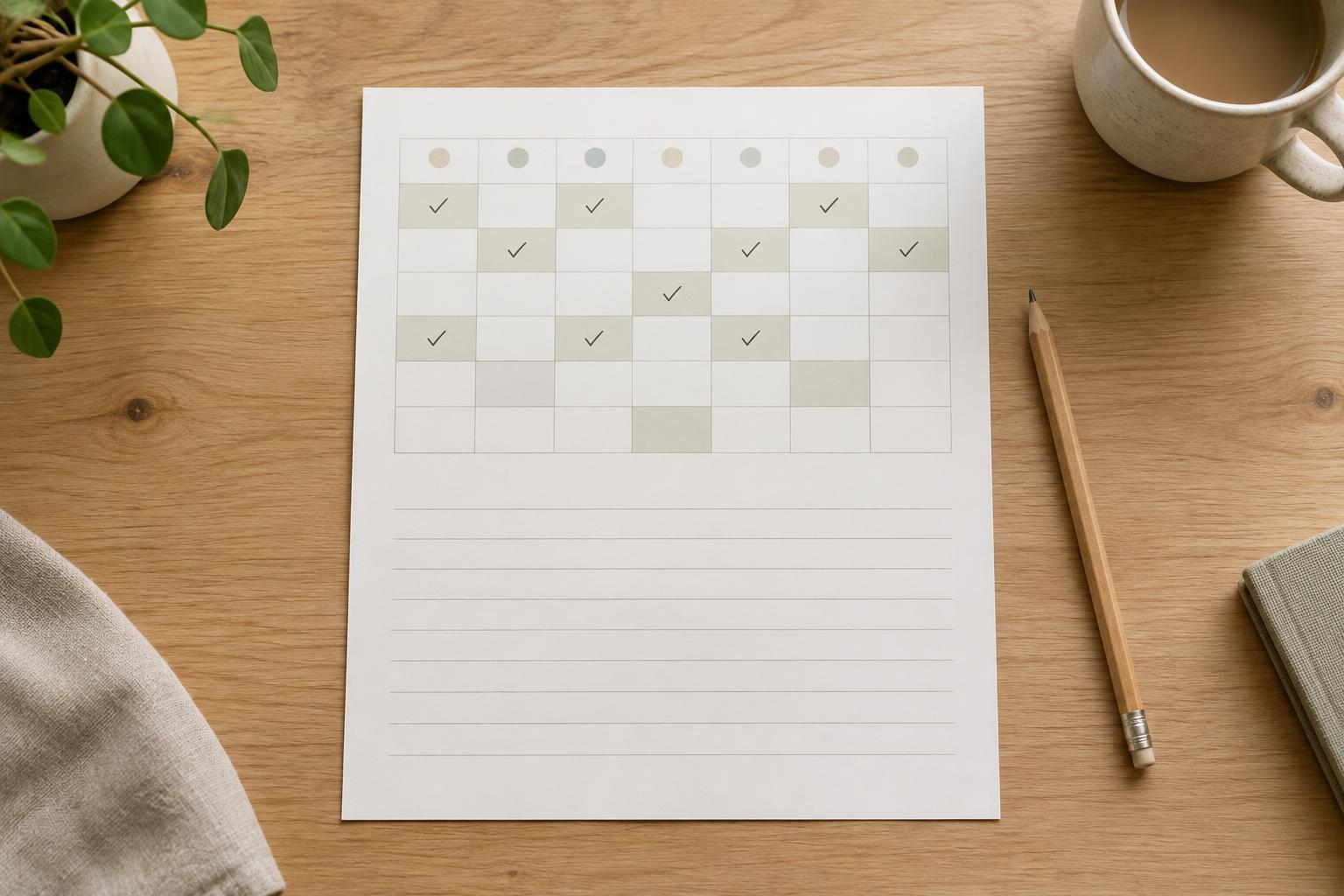
Keep the reading direction consistent. One straightforward weekly layout places habits in rows and days in columns, with a label at the left of each row. Put day names above the columns and give the date range its own prominent field. If the page tracks several habits, use enough row height that marks do not crowd the labels. Avoid adding more habits simply because the page has empty space; unused rows can provide flexibility for a later week.
Make the cells distinguishable without making the grid visually heavy. Light lines or alternating row backgrounds can guide the eye, while a darker rule can separate the habit-name column from the check-in cells. Use labels as well as color so the layout still makes sense when printed in grayscale. A simple key helps when marks have more than one meaning: for example, a check for completed and a dash for intentionally skipped. Keep the key close to the grid rather than in a distant footer.
Give progress more room than a checkbox
A checkmark records an action, but it does not always show effort or circumstances. Reserve a small area beneath the grid for a weekly note: “What helped?” and “What should change next week?” are prompts that invite useful observations without demanding a long journal entry. For a habit measured by quantity, such as pages read or minutes practiced, consider a narrow number field instead of a checkbox. The recording method should fit the habit, not the other way around.
You can also provide a modest progress summary, such as “Sessions completed: ___” beside “Planned sessions: ___.” This makes the intended interval visible and avoids treating every unmarked day as a failure. If the tracker includes a goal, leave space to revise it. A person may learn that a smaller, more consistent target suits their routine better. Progress space should support that adjustment, not turn the page into a scorecard.
Use type and spacing to establish a clear hierarchy
The page needs only a few levels of emphasis. Make the tracker title and date range easy to find, use clear medium-weight text for habit names and day labels, and keep instructions smaller but comfortably readable. Short headings work better than decorative phrases when someone is using the page repeatedly. Align labels and fields carefully so it is obvious which row each writing space belongs to.
Leave enough blank space to write by hand. Habit-name fields need room for more than a single word, and reflection lines should be long enough for a brief sentence. If the page feels crowded, remove decorative elements before shrinking the text or cells. Restrained color can highlight the date range or progress area, but the essential structure should come from alignment, spacing, and contrast.
Test the printable in everyday use
Print a draft at its intended size and make a few sample entries with an ordinary pen. Check whether the day labels remain legible, the cells are comfortable to mark, and the note area accommodates the kind of answer its prompt requests. Look at the page in grayscale as well as color. Keep important text and writing spaces away from the page edges so they are less likely to be cut off by typical printer margins.
Finally, walk through one complete interval as if you were using the tracker. Can you tell where to begin, what counts as an entry, and when to review the results? If any answer requires guessing, revise the labels before adding visual polish. The strongest habit tracker is not the one with the most boxes. It is the one that makes a small action easy to record and gives the person using it space to notice what they are learning.